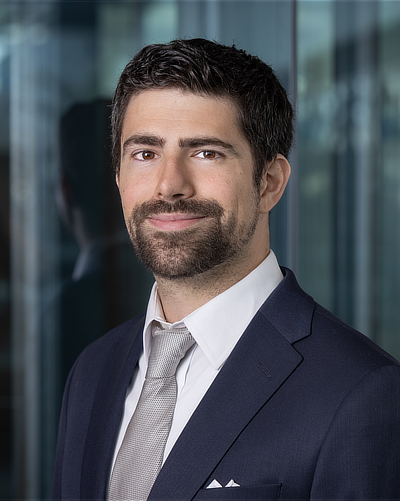
Portrait
Lucas Paulo da Silva is a Postdoctoral Research Associate in the Political Communication Division, Department of Communication Science and Media Research (IKMZ), University of Zurich.
Research Interests
His research focuses on digital news markets, media ideology, media effects, brand activism, and political behaviour. Lucas combines two types of research methods: computational methods (including machine learning, natural language processing, and large language models) and causal inference methods (including experiments, quasi-experiments, and panel data).
Educational Background
Lucas has a BA in media communications, history, and business from Calvin University (2011-2016) and an MSc in International Politics from Trinity College Dublin (2020-2021). He also studied data science (2021-2023) and submitted his PhD dissertation in Political Science (2021-2025) at Trinity College Dublin. His PhD dissertation (1) develops a new method of using large language models (LLMs) to classify media ideology, (2) tests the two-dimensional ideological structure of global media markets, (3) explores how cross-pressured voters (people with ‘inconsistent’ ideological positions) select political media, and (4) tests how this media exposure influences cross-pressured voters. Lucas has also worked as a regional director at a media organisation (2016-2020) and as a data science consultant for media projects (2020-2025).
Recent Research
1. da Silva, L.P. (2026). Media influence and spatial voting: The role of perceived party positions. Political Behavior. https://doi.org/10.1007/s11109-025-10031-9
2. da Silva, L.P. (2026). Parties influence public opinion far beyond their partisans: Evidence from two quasi-experiments. Journal of Elections, Public Opinion and Parties. https://doi.org/10.1080/17457289.2024.2395351
3. da Silva, L.P. and Han, J. (2026). Which world gets covered? Media ideology and the geography of foreign news. SSRN. http://dx.doi.org/10.2139/ssrn.7211478
4. da Silva, L.P. (2026). Online media outlets struggle to represent audiences in a two-dimensional ideological landscape. OSF. https://doi.org/10.31235/osf.io/mzxab_v2
5. da Silva, L.P. (2026). Why cross-pressured voters are always right: media and mediators. SocArXiv. https://doi.org/10.31235/osf.io/cyhsm_v2
6. da Silva, L.P., Schincariol, T., and Wack, M. (2026). Football empires: Simulating the effects of colonialism on the 2026 World Cup. SSRN. http://dx.doi.org/10.2139/ssrn.6885543
7. da Silva, L.P. (2026). Measuring online media ideology with large language models and "Multi-Cue Classification". OSF. https://doi.org/10.31235/osf.io/zmtqp_v1
8. Wack, M., Vogler, D., Arrigo, M., Pipal, C., and da Silva, L.P. (2026). Who sees politics in sports? Norm endorsement and partisan judgments from the 2026 World Cup. SocArXiv. https://doi.org/10.31235/osf.io/gtjp4_v1
9. da Silva, L.P. (2026). "What kind of bias do I want?" How cross-pressured voters select political media. Research Square. https://doi.org/10.31235/osf.io/6rxve_v3
10. da Silva, L.P. (2025). Ideological media markets, cross-pressured voters, and spatial voting: A computational and experimental approach. TARA.https://hdl.handle.net/2262/112311
Recent Media Coverage
1. da Silva, L. P. (2026, August 26). What kind of bias do I want? How cross-pressured audiences navigate the news. UK Data Service. Link
2. da Silva, L. P. (2026, July 1). Futebol, colonialism e o legado que ainda decide Copas, com o pesquisador Lucas Paulo da Silva [Podcast]. In "Política se Discute?". RW Cast. Link
3. Les Bleus avantagés par le passé colonial? Une étude suisse le montre. (2026, June 15). Watson. Link
4. Koloniale Verbindungen prägen Fussball-Erfolge bis heute. (2026, June 10). SWI swissinfo.ch. Link
5. Colonial connections shape football success to this day. (2026, June 10). blue News. Link
6. Study shows how colonial ties shape football success. (2026, June 10). The University of Zurich. Link
7. da Silva, L. P. (2025, September 2). Did the Liverpool boycott of The Sun change voting attitudes? [Radio broadcast]. In The Moncrieff Show. Newstalk. Link
8. Study finds people ‘became more left-wing’ after access to The Sun was limited. (2025, August 15). The London Economic. Link
9. Sun newspaper boycott made people in Liverpool more left wing. (2025, August 8). myScience. Link
10. da Silva, L. P. (2025, June 25). Did the Sun boycott make Liverpool more leftwing? My study indicates it may have shifted views. The Conversation. Link
Recent Presentations
1. da Silva, L.P., & Han, J. (2026). Which world gets covered? Media ideology and the geography of news. Digital Society Initiative (DSI) Digital Publics Conference, 21-23 October, 2026, Zurich, Switzerland.
2. Schulz, A., da Silva, L.P., Schenkel, M., & Reveilhac, M. (2026). Mapping research on negative news: A computational scoping review. Political Studies Association of Ireland (PSAI) Annual Conference, 16-19 October, 2026, Cork, Ireland.
3. da Silva, L.P., & Han, J. (2026). Which world gets covered? Media ideology and the geography of news. Political Studies Association of Ireland (PSAI) Annual Conference, 16-19 October, 2026, Cork, Ireland.
4. da Silva, L.P. & Berz, J. (2026). How do parliaments affect retrospective voting after technocratic-led governments? European Consortium of Political Research (ECPR) Annual Conference, 8-11 September, 2026, Kraków, Poland.
5. da Silva, L.P., & Han, J. (2026). Which World Gets Covered? Media Ideology and the Geography of News. European Political Science Society (EPSS) Annual Conference, 18-20 June, 2026, Belfast, UK.
6. da Silva, L.P. & Berz, J. (2026). How do parliaments affect retrospective voting after technocratic-led governments? European Political Science Society (EPSS) Annual Conference, 18-20 June, 2026, Belfast, UK.
7. da Silva, L.P. (2026). Measuring Online Media Ideology with Large Language Models and 'Multi-Cue Classification'. International Communication Association (ICA) Annual Conference, 4-8 June, 2026, Cape Town, South Africa.
8. da Silva, L.P. (2026). Mapping Online Media and Ideological Gaps with Large Language Models. International Communication Association (ICA) Annual Conference, 4-8 June, 2026, Cape Town, South Africa.
9. da Silva, L.P. & Han, J. (2026). Which World Gets Covered? Media Ideology and the Geography of Foreign News. Midwest Political Science Assocation (MPSA) Annual Conference, 23-26 April, 2026, Chicago, IL, USA.
10. da Silva, L.P. (2026). ‘What Kind of Bias Do I Want?’ How Cross-Pressured Voters Select Ideological Media. Political Studies Association (PSA) Annual Conference, 30 March to 1 April, 2026, Oxford, UK.
11. da Silva, L.P. & Berz, J. (2026). How Do Parliaments Affect Retrospective Voting after Technocratic-Led Governments? Political Studies Association (PSA) Annual Conference, 30 March to 1 April, 2026, Oxford, UK.
12. da Silva, L.P. & Han, J. (2026). Which World Gets Covered? Media Ideology and the Geography of Foreign News. Political Studies Association (PSA) Annual Conference, 30 March to 1 April, 2026, Oxford, UK.
13. da Silva, L.P. (2025). Why Cross-Pressured Voters Are Always Right: Media and Mediators, Political Studies Association of Ireland (PSAI) Annual Conference, 17–19 October, 2025, Galway, Ireland.
14. da Silva, L.P. (2025). ‘What Kind of Bias Do I Want?’ How Cross-Pressured Voters Select Ideological Media, American Political Science Association (APSA) Annual Meeting, 11–14 September, 2025, Vancouver, Canada.
15. da Silva, L.P. (2025). Mapping Media Markets and Ideological Gaps with Machine Learning and Large Language Models, COMPTEXT Annual Conference, 24–26 April, 2025, Vienna, Austria.
16. da Silva, L.P. (2025). Measuring Online Media Ideology with Large Language Models and ‘Multi-Cue Classification’, COMPTEXT Annual Conference, 24–26 April, 2025, Vienna, Austria.
17. Berz, J. & da Silva, L.P. (2025). Technocratic Ministers and Electoral Accountability, New Perspectives on Prime Ministers Workshop, 5-7 February, 2025, Mannheim, Germany.
Teaching
1. da Silva, L. P. (2025, January–April). Introduction to Quantitative Research Methods [Seminars taught, MSc International Politics, 10 ECTS credits]. Trinity College Dublin.
2. da Silva, L. P. (2024, September–December). Research Methods for Political Science [Seminars taught as Head Teaching Assistant, BA, 5 ECTS credits]. Trinity College Dublin.
3. da Silva, L. P. (2024, January–April). Introduction to Quantitative Research Methods [Seminars taught, MSc International Politics, 10 ECTS credits]. Trinity College Dublin.
4. da Silva, L. P. (2023, September–December). Research Methods for Political Science [Seminars taught as Head Teaching Assistant, BA, 5 ECTS credits]. Trinity College Dublin.