CVMR25
Computational Visual Media Research (CVMR): Methods, Theories, and Reflections
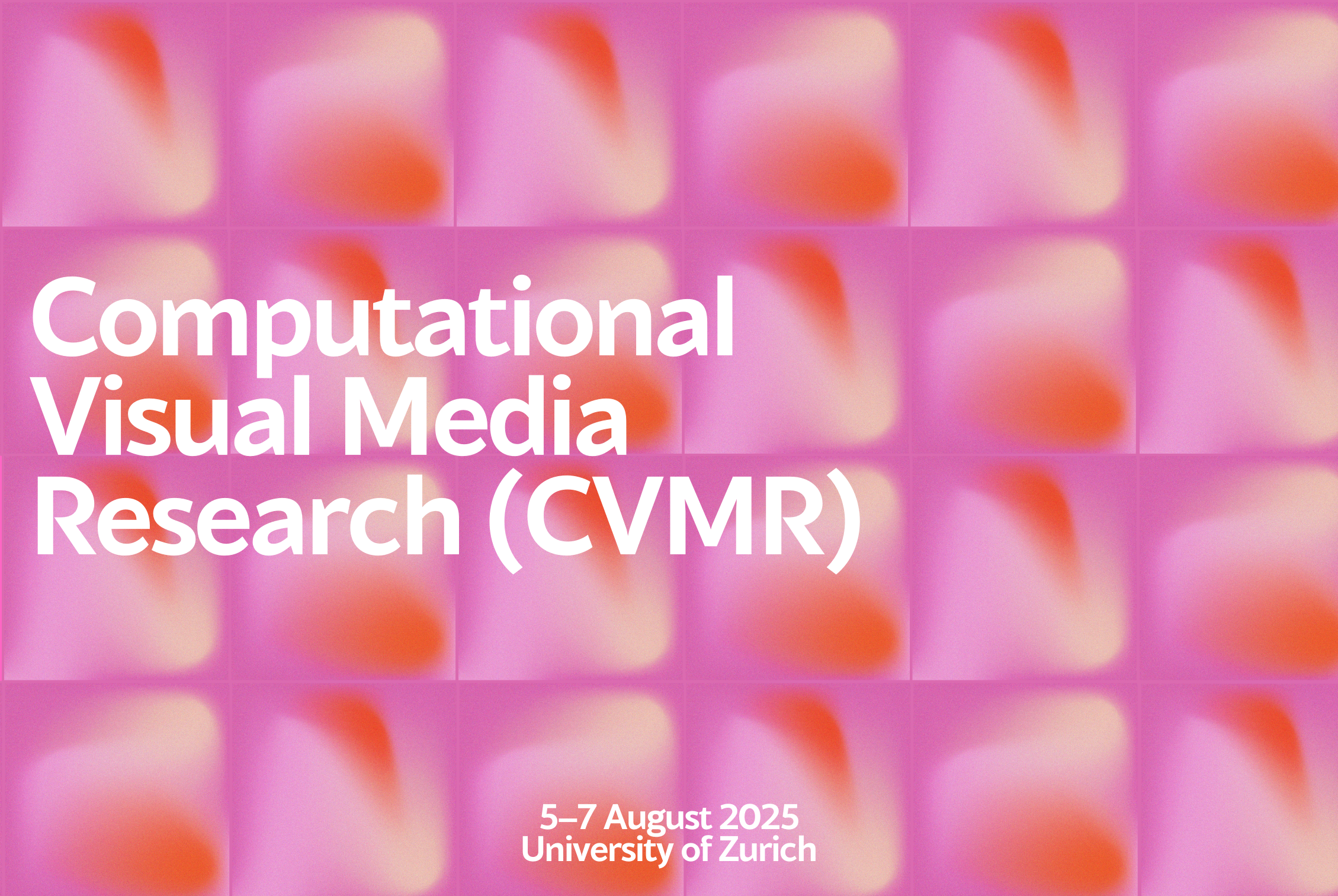
5–7 August 2025 | University of Zurich
As visual communication becomes increasingly central to digital culture, understanding how to analyze and interpret visual media at scale is both a methodological and theoretical challenge. The Computational Visual Media Research (CVMR) symposium brings together scholars working at the intersection of computation, theory, and critique to explore innovative approaches to the study of visual media.
This three-day symposium aims to foster interdisciplinary dialogue and methodological innovation in response to the growing prominence of visual content in public discourse and cultural production. It provides a platform for developing new frameworks that integrate computational tools with critical and theoretical perspectives in media and communication research.
The symposium focuses on three core areas:
- Development and evaluation of computational tools for large-scale visual media analysis
- Integration of theoretical frameworks with methodological innovation
- Application of visual research methods to pressing social issues such as political activism, journalism, misinformation and hate speech
By bridging these domains, CVMR promotes critical reflection on methodological practices and encourages the exploration of new approaches to visual data analysis.
The symposium includes the following components:
- Hands-on workshops showcasing innovative analytical tools and techniques
- Panel presentations featuring current research and interdisciplinary approaches
- Fishbowl discussion sessions focused on challenges and future directions in computational visual media research
Registration
Unfortunately, applications to attend the event are now closed.
Organizer
Prof. Dr. Jing Zeng, Department of Communication and Media Research, University of Zurich
Symposium Program
The CVMR25 symposium takes place at Room KO2-F152, UZH Main Building, Rämistrasse 71, 8006 Zurich.
The program can be downloaded here (PDF, 370 KB).
The abstracts can be downloaded here (PDF, 480 KB).